
September 2025

| Day | Date | Start | End | Details | Holy Communion? |
|---|---|---|---|---|---|
| Sunday | 7th | 9.15 | 12.45 | Sunday Service – Divine Liturgy | Yes |
| Sunday | 7th | 18.30 | 19.30 | Vespers – The Nativity of the All Holy Mother of God | No |
| Monday | 8th | 9.30 | 11.30 | The Nativity of the All Holy Mother of God | Yes |
| Saturday | 13th | 18.30 | 19.30 | Vespers – Exaltation of the Holy Cross | No |
| Sunday | 14th | 9.15 | 12.45 | Exaltation of the Holy Cross | Yes |
| Sunday | 21st | 9.15 | 12.45 | Sunday Service – Divine Liturgy | Yes |
| Sunday | 28th | 9.15 | 12.45 | Sunday Service – Divine Liturgy | Yes |
The Feast of the Nativity of Our Most Holy Lady, the Theotokos and Ever-Virgin Mary
The Feast of the Nativity of Our Most Holy Lady, the Theotokos and Ever-Virgin Mary is celebrated on September 8 each year. The Feast commemorates the birth of the Mother of Jesus Christ, our Lord.
Background
The birth and early life of the Virgin Mary is not recorded in the Gospels or other books of the New Testament, however this information can be found in a work dating from the second century known as the Book of James or Protevangelion.
According to the story found in this book, Mary’s parents, Joachim and Anna, were childless for many years. They remained faithful to God, but their prayers for a child were unanswered. One day, when Joachim came to the temple to make an offering, he was turned away by the High Priest who chastised him for his lack of children. To hide his shame, Joachim retreated to the hill country to live among the shepherds and their flocks.
As Joachim was praying, his wife Anna was praying at the same time at their house in Jerusalem. An angel appeared to both of them and announced that Anna would have a child whose name would be known throughout the world. Anna promised to offer her child as a gift to the Lord. Joachim returned home, and in due time Anna bore a daughter, Mary.
Icon of the Feast
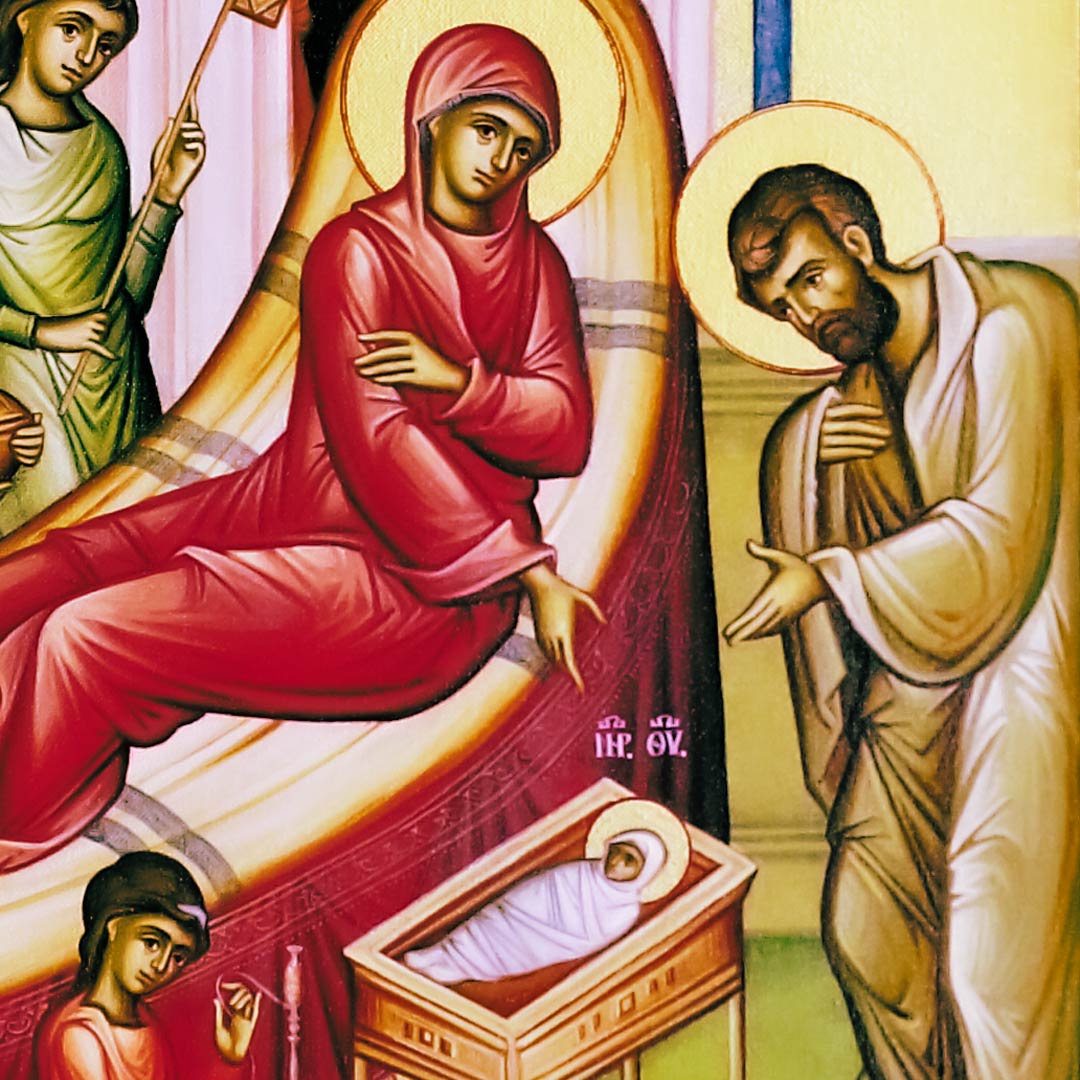
The icon directs attention to Mary as the central figure in this feast. It also acknowledges the joy that was felt by Joachim and Anna as new parents with a child received through a promise from God. The liturgical texts of the feast acknowledge this joy and confirm the special role of Mary as the Mother of the Incarnate God, Jesus Christ. In this event, another step is made in sacred history in preparation for the entrance of Christ into the world.
The icon and the feast also acknowledge a transition from barrenness to life. This was but another foreshadowing of what would be offered through Christ, the transformation from death to eternal life.
Orthodox Christian Celebration of the Feast of the Nativity of the Theotokos
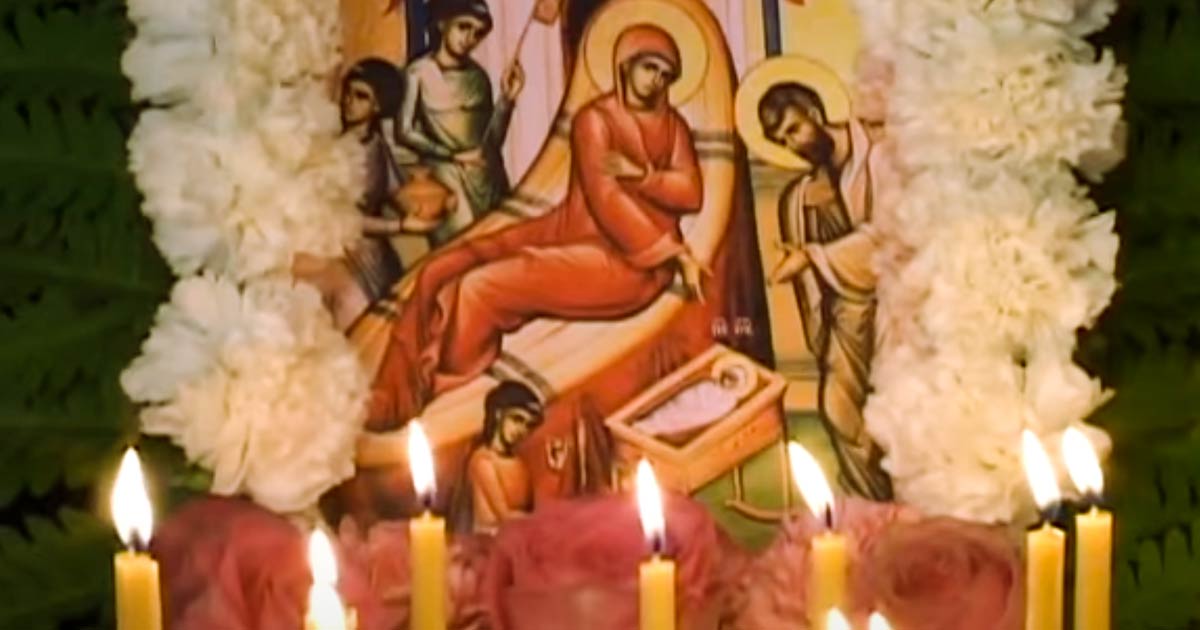
The Feast of the Nativity of the Theotokos is celebrated with the Divine Liturgy of Saint John Chrysostom which is conducted on the morning of the Feast and preceded by a Matins (Orthros) service. A Great Vespers is conducted on the evening before the day of the Feast. Scripture readings for the Feast are the following: At Vespers: Genesis 28:10-17; Ezekiel 43:27—44:4; Proverbs 9:1-11. At the Matins: Luke 1:39-49, 56. At the Divine Liturgy: Philippians 2:5-11; Luke 10:38-42; 11:27-28.
The Exaltation of the Holy Cross
The Feast of the Universal Exaltation of the Precious and Life-Giving Cross is celebrated each year on September 14. The Feast commemorates the finding of the True Cross of our Lord and Saviour Jesus Christ by Saint Helen, the mother of the Emperor Constantine.
Background
In the twentieth year of his reign (326), the Emperor Constantine sent his mother Saint Helen to Jerusalem to venerate the holy places and to find the site of the Holy Sepulchre and of the Cross. Relying upon the oral tradition of the faithful, Saint Helen found the precious Cross together with the crosses of the two thieves crucified with our Lord. However, Helen had no way of determining which was the Cross of Christ.
With the healing of a dying woman who touched one of the crosses, Patriarch Macarius of Jerusalem identified the True Cross of Christ. Saint Helen and her court venerated the Precious and Life-Giving Cross along with many others who came to see this great instrument of Redemption.
The Patriarch mounted the ambo (pulpit) and lifted the Cross with both hands so that all of the people gathered could see it. The crowd responded with “Lord have mercy”.
This became the occasion of the institution in all of the Churches of the Exaltation of the Precious Cross, not only in memory of the event of the finding of the Cross, but also to celebrate how an instrument of shame was used to overcome death and bring salvation and eternal life.
The Feast is an opportunity outside of the observances of Holy Week to celebrate the full significance of the victory of the Cross over the powers of the world, and the triumph of the wisdom of God through the Cross over the wisdom of this world. This Feast also gives the Church an opportunity to relish the full glory of the Cross as a source of light, hope and victory for Christ’s people. It is also a time to celebrate the universality of the work of redemption accomplished through the Cross: the entire universe is seen through the light of the Cross, the new Tree of Life which provides nourishment for those who have been redeemed in Christ.
Icon of the Feast
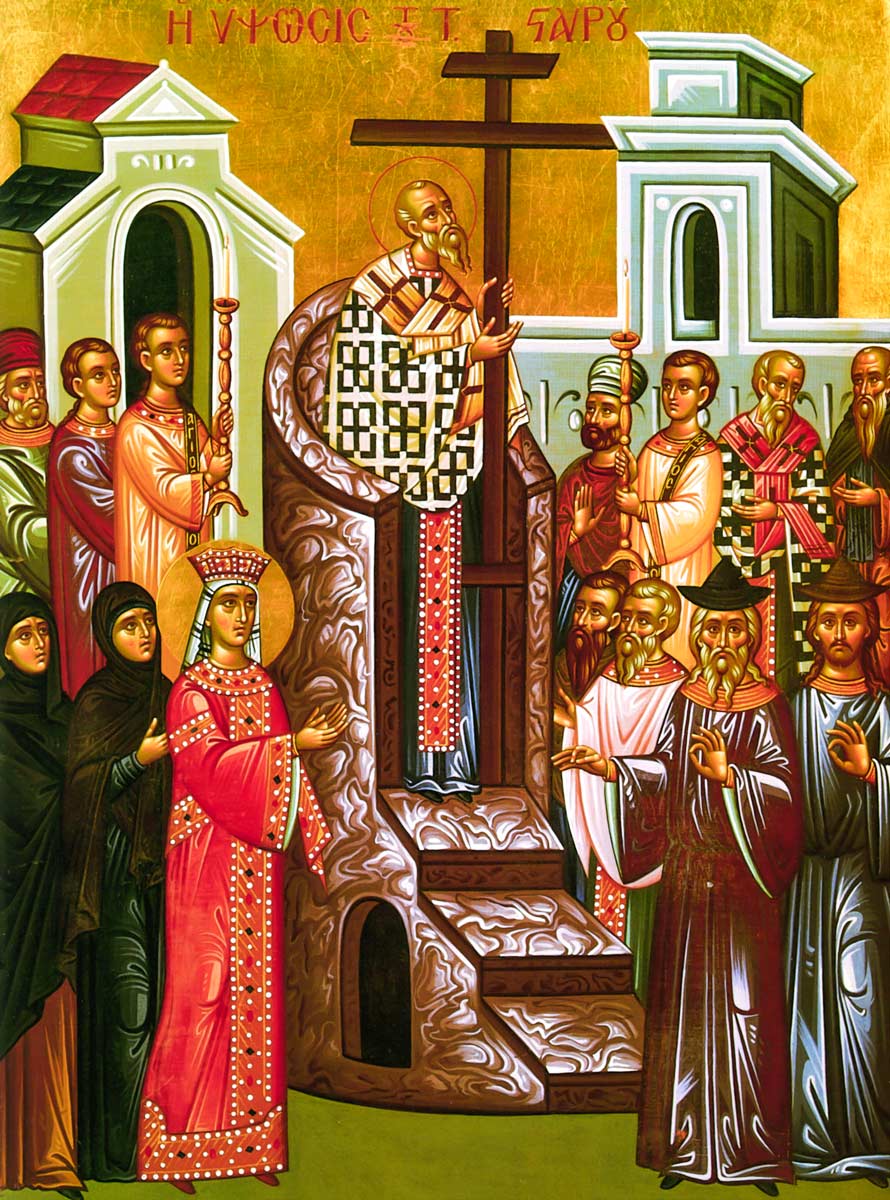
The icon of the Feast of the Precious Cross tells the story of the finding of the Cross and of its Exaltation. Patriarch Macarius is standing in the pulpit elevating the Cross for all to see and venerate. On each side of the Patriarch are deacons holding candles. The elevated Cross is surrounded and venerated by many clergy and lay people, including Saint Helen, the mother of Emperor Constantine.
In the background of the icon is a domed structure that represents the Church of the Resurrection in Jerusalem. This church was one of the churches constructed and dedicated by Emperor Constantine on the holy sites of Jerusalem.